NYFW SP26 : Tales from the feather Trenches
For a recent runway project, I found myself on a team for feather embroidery for a collection of garments. This assignment was equal parts artistry, patience, and… mild chaos.
Our process began in Midtown, where we sourced feather boas and carefully took them apart. And by “carefully,” I mean plucking feathers one by one until it felt like we had personally offended several imaginary birds. Somewhere along the way, the studio started to look like a very glamorous crime scene.
Once we had gathered enough feathers, the real work began. We grouped them in sets of four and glued them together at the tips. The technique was surprisingly hands-on: applying glue to our fingers, waiting until it turned tacky, and then pinching the ends of the feathers together. This helped us avoid creating bulky glue blobs—because in runway work, even a millimeter too much can make a difference.
After that, we combined two sets of four to create bundles of eight. Through a fair amount of trial and error (and questioning our life choices), we discovered that eight feathers struck the perfect balance—full and fluffy, but still refined enough to attach cleanly to the garments without adding bulk.
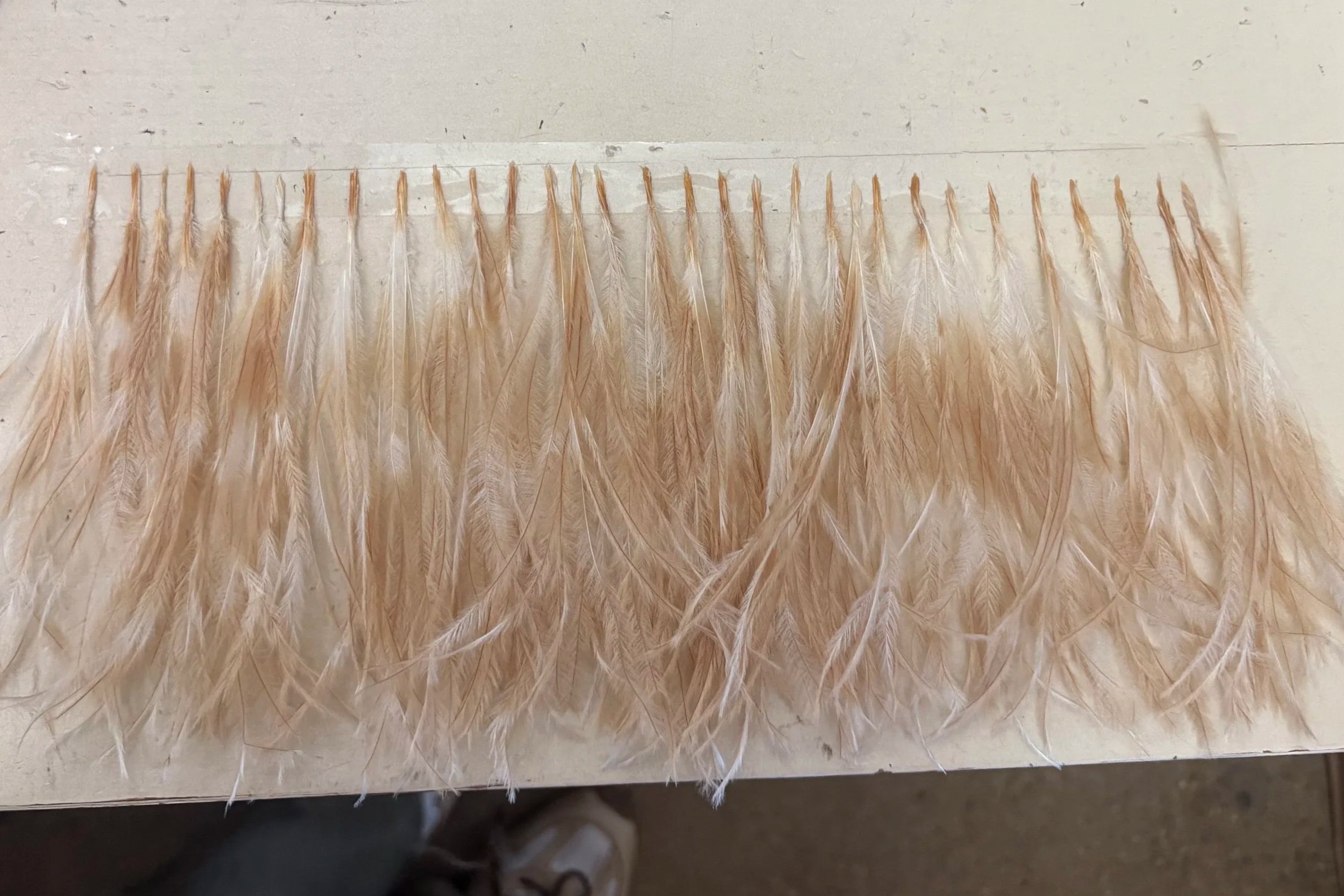
I stuck finished bundles to double sided tape in hopes to avoid them flying away… literally every time someone walked past my desk the feathers would take flight
Before assembling, we meticulously sorted through the feathers, selecting only the most beautiful, soft, and fluffy ones. The thinner, less cooperative feathers affectionately dubbed the “ugly ducklings” were discarded. I’m fairly certain we went through thousands. So if anyone has a sudden need for about 2,000 slightly questionable feathers, I might know a person.
After weeks of sticky fingers, at one point I was essentially tarred and feathered myself, we finally had enough bundles to complete the garments. What followed were long hours of stitching, adjusting, and perfecting.
Attaching the bundles to the garments was deceptively simple. Each cluster was hand-stitched tightly at the base and carefully tacked into place. The real challenge? Avoiding the lining. Since the garments were already constructed, every stitch had to be precise, no accidental catches, no shortcuts. Just slow, deliberate work and a lot of concentration.
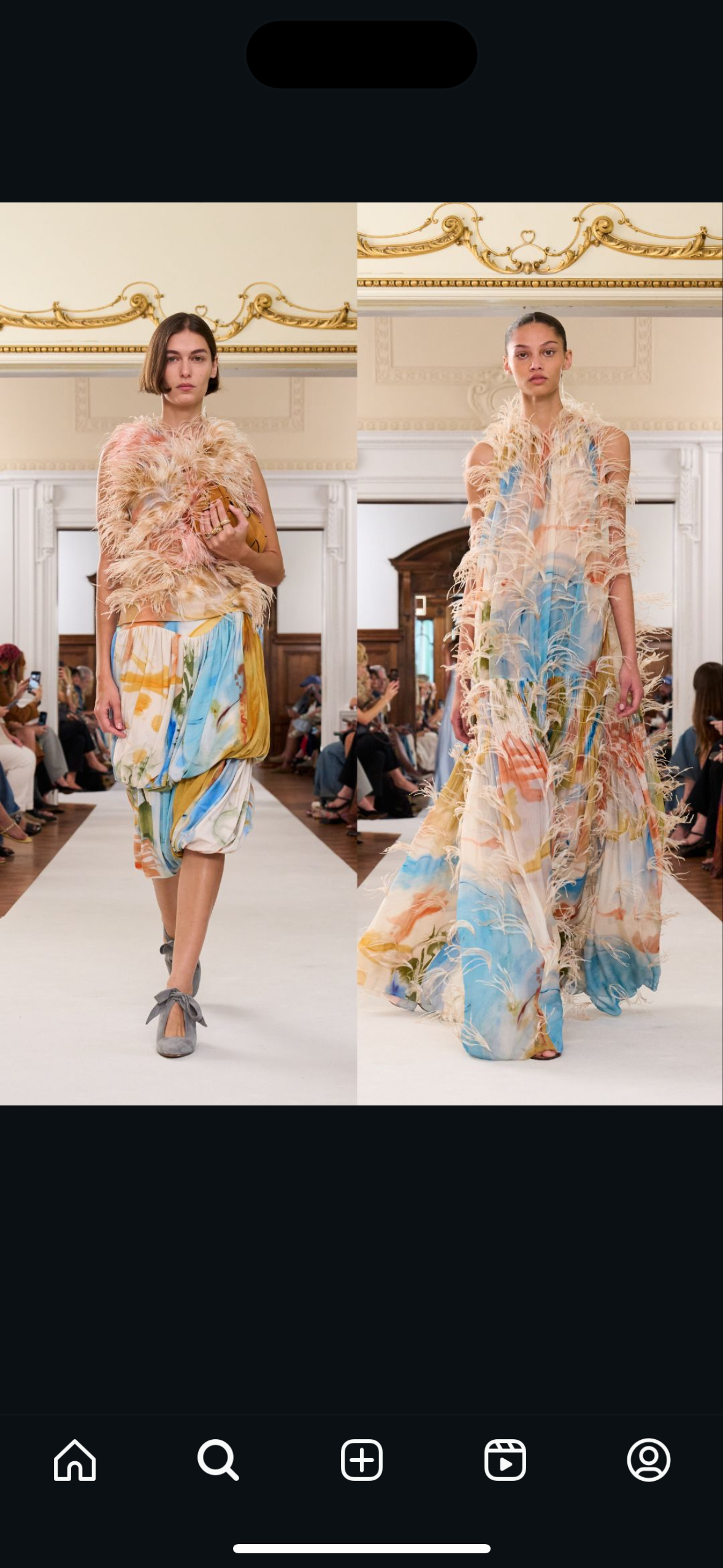
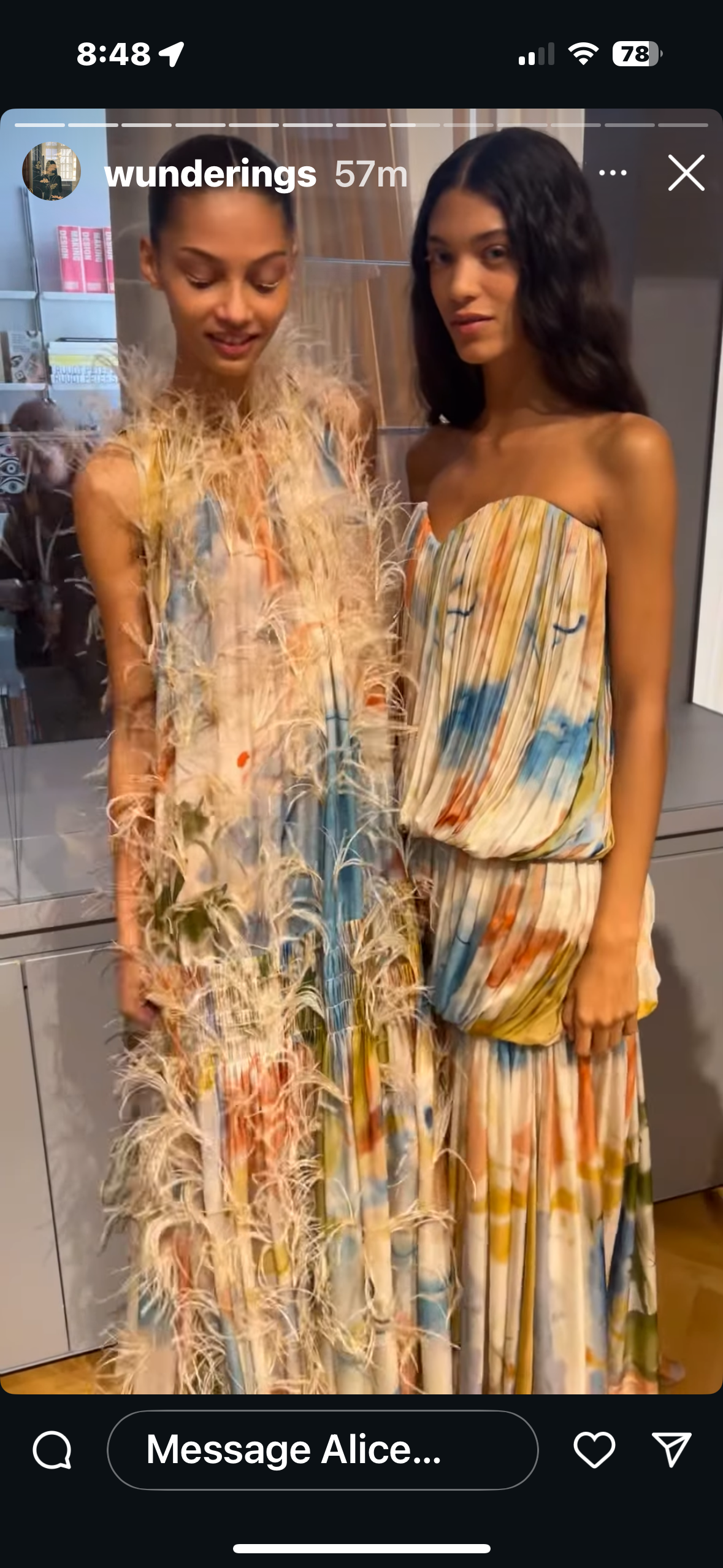
Design wise, each piece required a different approach. The dresses, for example, featured a more spaced-out arrangement, which meant every feather bundle had to sit just right—full, but not bulky. Balance was everything.
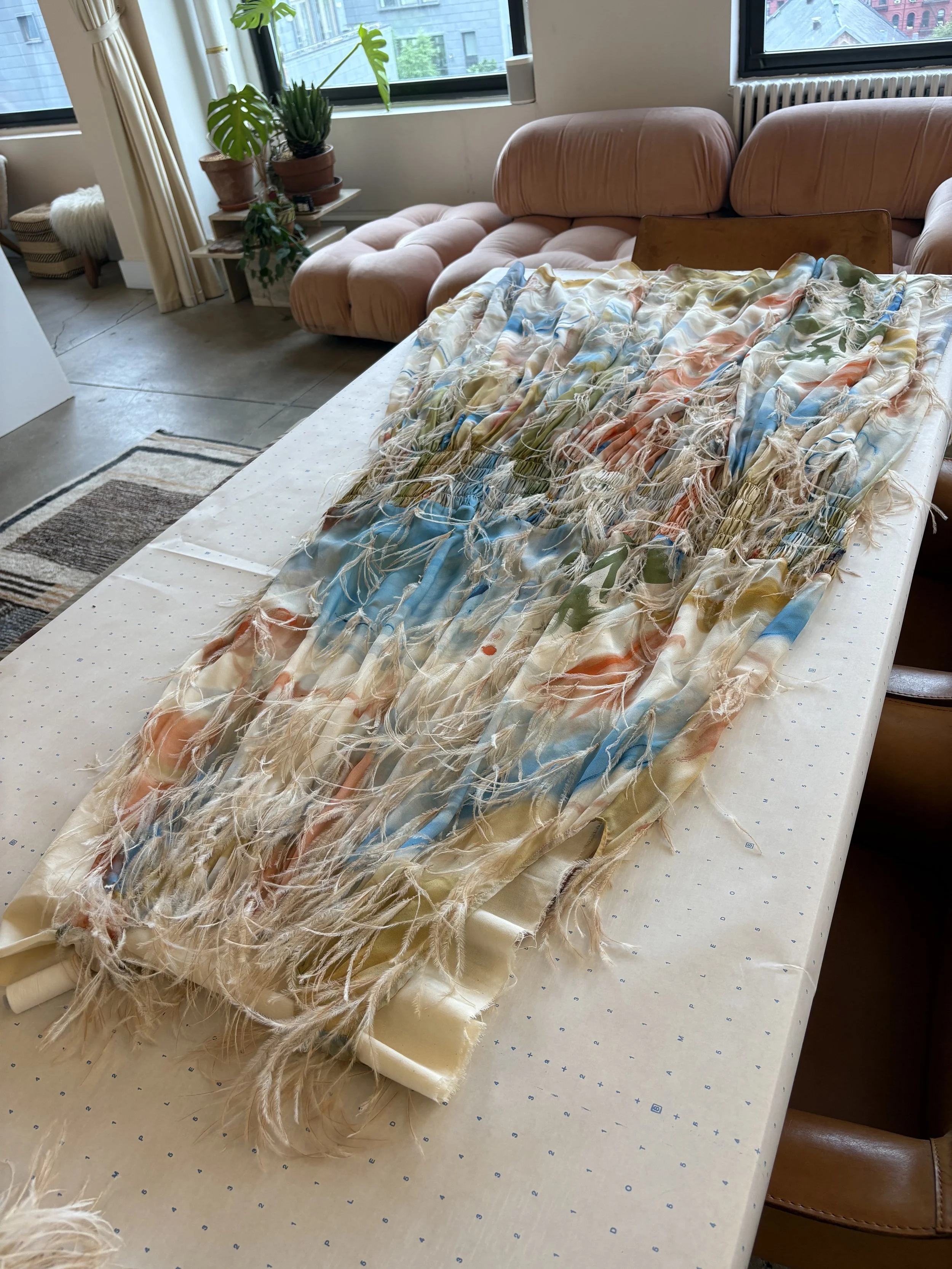
We slid some muslin in the dress to help avoid going through the lining or the back of the dress
And then, the payoff.
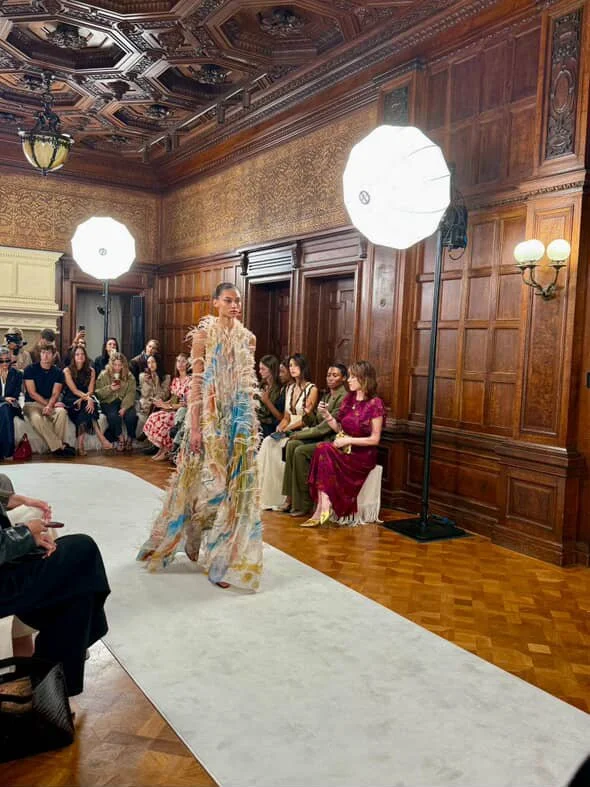
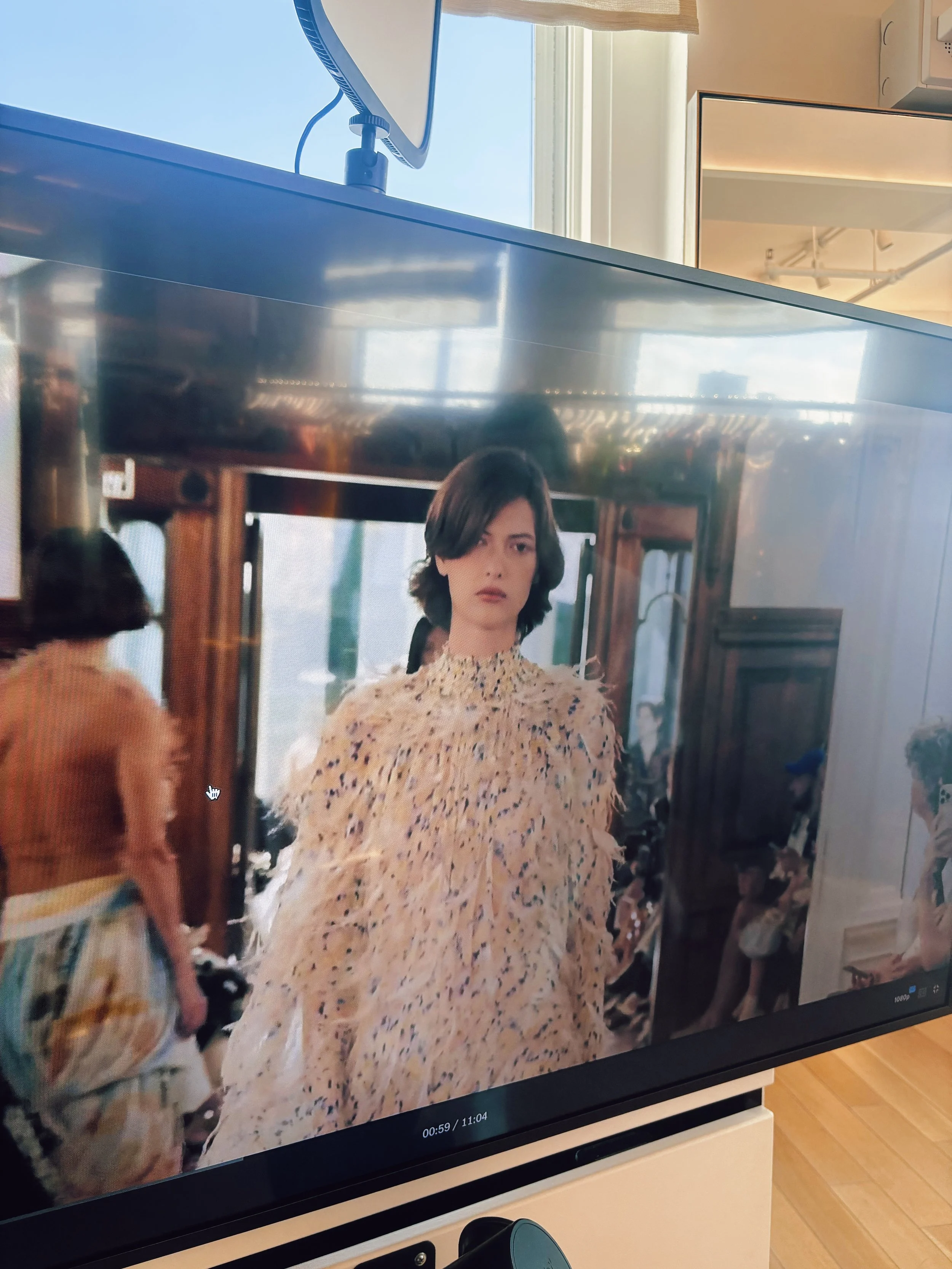
On a beautiful Sunday morning, the finished pieces glided down the runway at the Cooper Hewitt Museum, and every painstaking detail came to life. Seeing the garments move—feathers catching the light, textures shifting with each step—made every glue-covered moment worth it.
It’s funny how something as delicate as a feather can demand so much precision, patience, and persistence. But that’s the magic of this kind of work: transforming the messy, repetitive, behind-the-scenes process into something effortless and extraordinary on the runway.
And yes I am still finding feathers in my bag.